
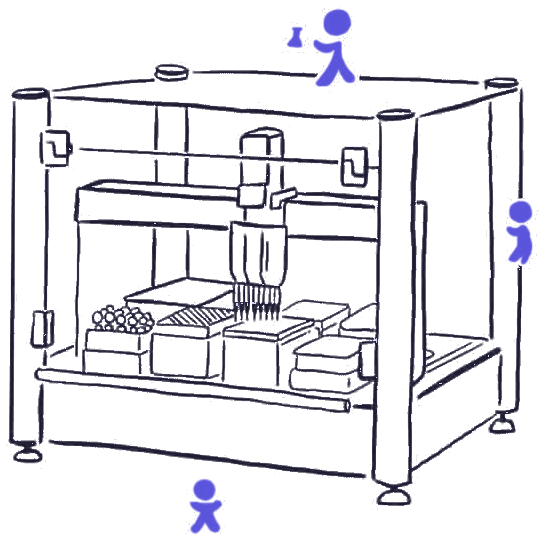
Let AI agents control your lab instruments.
We turn the control software on each instrument into one uniform layer. An AI agent can then send parameters and instructions straight to the instrument.
How Project IO handles a protocol
Agents running Project IO have built-in biological safeguards to ensure protocol fidelity and safety.
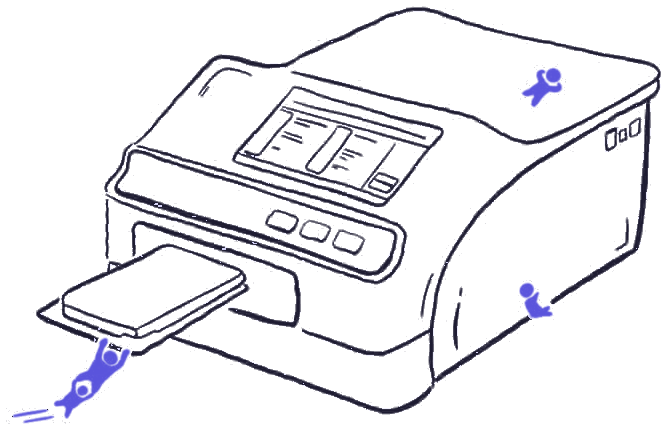
- Bring a protocol. From the internet, a manufacturer, a kit insert or your own notes.
- An agent builds the run. A fine-tuned agent that knows how to configure liquid handlers and other instruments writes the protocol steps.
- Simulated and checked. Each proposed run is simulated on a digital twin of existing lab instruments, so scientists can preview a whole protocol before it is executed in the lab. The protocol then goes through a long list of validation checks, and any problems surfaced get sent for human review.
- Signed off by a person. Models propose a draft run but require human approval before executing. Execution is deterministic once human review is approved.
- The protocol runs, and it’s logged. The protocol goes through our layer to existing lab instruments, whichever they may be. Each protocol run is logged end to end to serve as a record for future auditing.
Put a PCR attachment on an Opentrons and we can run the PCR end to end. Through the MCP, the agent controls the robot and tells it how to move and operate.
No more typing up scripts, or filling in pages of drag-and-drop blocks by hand, saving analysts hours on their protocol prep.
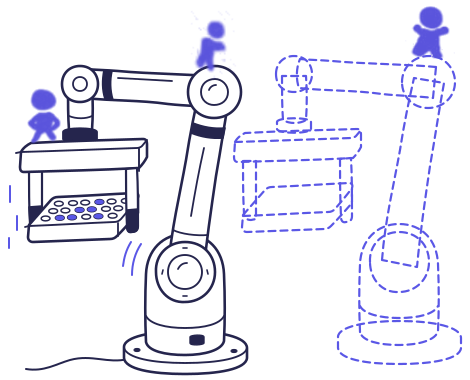
Every run happens twice. First on a digital twin.
Infera rehearses the whole protocol on a digital copy of your instrument and deck, checking every step against the plates, volumes and tips that are actually there. Problems show up first in the rehearsal instead of on the bench.
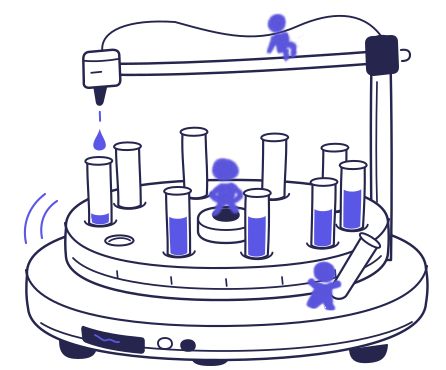
Runs that don’t need watching.
Give the instrument five sets of parameters for an assay. The agent starts in the middle, works through the rest, and optimizes as it goes. Nobody has to sit there and babysit it.
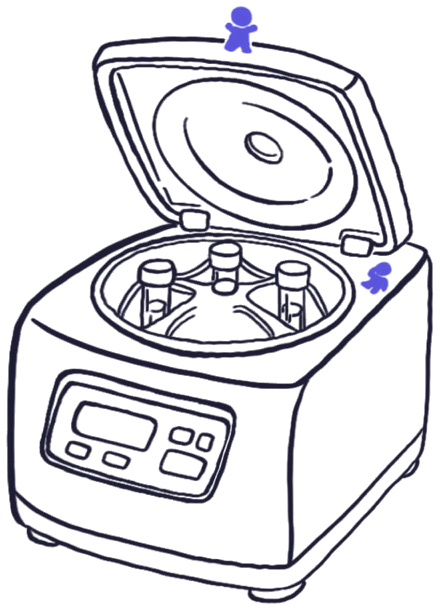
Older and manual instruments
Plenty of instruments, especially in academic labs, can’t be automated. Every run is still logged: import a protocol, track each instrument step, and add the context someone needs to operate it. Anyone in your workspace can then run that instrument or ask the agent about its manual.
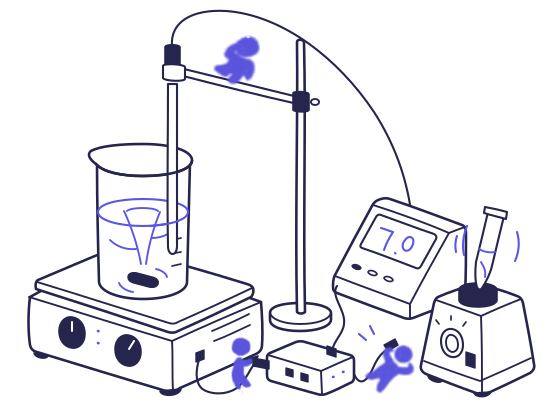
Works with your lab
Every instrument ships its own closed software, and most labs run a mix of vendors. Project IO gives them one interface. If it takes a command or writes a file, we can connect it, usually within days.
- Protocols
- Bring them in from Benchling, PDFs, Google Drive or Dropbox.
- Alerts
- Email, text or Slack alerts for when protocols fail validation.
Using something that isn’t here? Tell us what you use.
Questions
What format does my protocol need to be in?
Any protocol in plain language: a PDF, a list of steps, the instructions from a reagent kit or a paragraph about what you want to do. If you have a protocol written for a different instrument, we can retarget it to yours.
What does it optimize once the run works?
First, a protocol that validates and runs. After that, what your lab needs: longer walkaway time with no manual steps, and less waste.
Where does it run? Can we host it ourselves?
The app runs on a desktop or laptop. The back end is hosted by us or on your own servers. On-prem is often more secure; the trade-off is that some frontier model capabilities are only available through the model providers.
Who owns our data, and where does it go?
Your data belongs to you. The audit trail is built for regulated environments, and data handling depends on your plan and setup. We’re happy to walk your team through it. See Security.
What kinds of labs use it?
Core facilities, diagnostic labs and production labs, mostly around Boston and the Bay Area.
How long until our first run?
Usually less than a few weeks. We’re in the lab with you to get it working, and it goes faster the more time you can spend with us.
What does it cost?
It depends on the size of your lab and how much you use it. Pricing goes from a small academic lab up to a production facility. Tell us about your setup and we’ll find what fits.